Posts

(500) Days of Summer

There's a scene that comes about halfway into Charlie Kaufman's Eternal Sunshine of the Spotless Mind , and very early in the romance between its main characters, Joel and Clementine.  After a less than ideal first meeting, Joel visits Clementine at her workplace in search of a second chance, and though she's willing, she also matter-of-factly lays down the ground rules of their fledgling relationship.  "Too many guys think I'm a concept or I complete them or I'm going to make them alive," Clementine tells Joel, "but I'm just a fucked-up girl who is looking for my own peace of mind."  A beat, and then the two shift character, into the Joel who is deleting his memories of Clementine following the failure of their relationship, and the Clementine in his head, who acts as his tour guide in a nonlinear reenactment of it.  Ruefully, Joel admits that he didn't heed Clementine's warning.  "I still thought you were going to save me.  Eve...
Recent Reading Roundup 23

Image
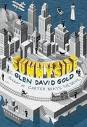
It's been a long time since I did one of these, so long that some of the books I read in the interim have already faded so much in my memory that I can't comment meaningfully on them.  Here are my thoughts on the ones that have lingered. Sunnyside by Glen David Gold - Gold's long-awaited follow-up to the enormously enjoyable Carter Beats the Devil features the same careful attention to period detail, and the same seemingly effortless evocation of early 20th century Americana, but it is also so shapeless, so caught up in the desire to make Meaningful Statements, that it becomes the exact opposite of Carter --a genuine chore to read.  Like Carter , Sunnyside is a When It Changed novel, this time focusing on film, and particularly film star celebrity, rather than television.  But whereas Carter made a relatively modest statement--that the invention of television changed the face of public entertainment, in the process putting acts like the superstar magician out of bus...

Thoughts on the New TV Season, 2009 Edition, Part 4

My God, it will not end .  Progress report: Community and The Good Wife remain very good.  Stargate: Universe seems to be using the loosest possible interpretation of 'plot' (it would be nice to think that the two episodes in which the characters gloomily contemplate their imminent demise as the ship flies straight towards a star, only for its automated systems to save them at the last minute, represent the nadir of the show's storytelling, but as we're only seven episodes in that seems unlikely) while expending most of its energy on soapy shenanigans.  But since most of the characters are underdeveloped, the relationships between the main castmembers are nearly nonexistent, and the writers show little or no flair for enjoyably trashy, Melrose Place -style plotting, it's hard to care about X's affair with Y and A's unrequited crush on B.  The show seems determined to alienate the franchise's core fanbase without doing enough to capture a new one. ...

Thank Goodness for Small Favors

TV site CliqueClack interviews Defying Gravity creator James Pariott about his plans for the now-defunct series's future, and his revelations about the planned storyline for the character Nadia--a no-nonsense, unemotional, extremely sexually aggressive German woman--put even the most fail-tastic of science fiction shows to shame: Nadia — She had quite the odd hallucinations, didn’t she? Who was that man she kept seeing, and why did he look so much like Nadia? As Parriott revealed to me, some fans of the show got it right in their guess that she was, in fact, a hermaphrodite when she was born. The choice was made for her when she was 11, by her parents, which sex she’d ultimately become. So that man we’re seeing is actually what Nadia would have been, had they chosen to raise her — or him — as a man. Now, here’s the wild kicker. All those DNA changes that are happening with the crew, caused by Beta and the other artifacts? Well, they would eventually wind up causing Nadia t...

Future History, Repeated

In my post about The Children's Book , I suggested that historical fiction might be broadly defined as fiction that takes place in a time and setting not directly experienced by its author.  Within that definition one can distinguish between different kind of historical novels according to how close they come to recorded history, to the people and events in the history books.  A historical novel can center entirely or for the most part around fictional people living ordinary (for their time) lives in the past ( The Little Stranger , Sacred Hunger , Possession ).  Or it can describe fictional people being caught up in momentous events ( Octavian Nothing , Year of Wonders , The Children's Book ).  Or it can place fictional characters at the epicenter of the great changes of their time, sometimes rubbing shoulders with historical figures, sometimes taking their place (Dorothy Dunnett's Lymond Chronicles , The Baroque Cycle ).  Or it can dispense with fictional cha...

The Magicians by Lev Grossman

GUNN: How do you avoid reality? VIRGINIA: Money.  It cures everything but boredom and food cures boredom, so there you go. Angel , "Happy Anniversary" Several weeks ago, Publishers Weekly 's science fiction blog got bent out of shape over the New York Times review of Lev Grossman's The Magicians , in which reviewer Michael Agger made statements like "Fantasy novels involve magic and are a little bit like magic themselves.  To work, they require of their readers a willingness to be fooled, to be gulled into a world of walking trees and talking lions.  They affect us most powerfully as teenagers, but then most of us move on to sterner, staider stuff."  Such generalizations, insisted blogger Josh Jasper, were "so demeaning towards the genre as to stand out" from even the Grey Lady's general inability to grok it, and represented the belief that "Fantasy novels are suitable for entertaining uncultured teenagers, and require sneering ...

Killer Kids(' Books): Two Novels

2008 was the year of the YA novel.  You could see it on the Hugo ballot, on bestseller lists, and on the blogosphere.  On a personal level, I see it in the fact that I'm still catching up to the year's crop, starting with a book that received ecstatic and effusive praise from many of my friends and most respected reviewers, Patrick Ness's The Knife of Never Letting Go .  To name but a few, Niall Harrison , Dan Hartland , and Adam Roberts have all raved about it, and Martin Lewis called it "the best effing science fiction novel I've read all year."  Taken together, these reviews build up a heavy burden of expectations that few novels could gracefully shoulder, and even as I was turning The Knife of Never Letting Go 's first page I was preparing myself for the inevitable disappointment.  My reaction to the novel, however, turns out to be more complicated. Knife is a compelling, engrossing read.  I wolfed it down in a single sitting, and found myself genui...

Inglourious Basterds: The Israeli Response

This post was inspired by Matt, who in the comments to my post about why I wouldn't be watching Quentin Tarantino's Holocaust action film, Inglourious Basterds , wondered what the Israeli critical and popular response to the film would be.  Which struck me as an interesting question, and hence this post.  All quotes are my translation from the Hebrew originals, and all links go to Hebrew sites. The Tel Aviv weekly entertainment guide Achbar HaIr ( City Mouse ) publishes the Reviewers' Table, which ranks all films screening in the city according to the average star rating they received from nine different sources, including the three Hebrew language daily papers ( Yediot Acharonot , Maariv , and Haaretz ), the two Tel Aviv guides ( Achbar HaIr and Time Out Tel Aviv ), the two national TV and film guides ( Pnai Plus and Rating ), the free daily paper Israel Today and the military radio station Galei Tzahal.  English and Russian daily papers are not represented (thoug...